09.04 — 13.06.2026
EUGÈNE BOUDIN | CARLOTTA IKEDA | YVES KLEIN | NIKA KUTATELADZE | INGEBORG LÜSCHER | FAUSTO MELOTTI | ANA MENDIETA | LEON SPILLIAERT | NICOLAS DE STAËL
« To the the scholars, dawn and twilight are one and the same phenomenon; and the Greeks thought the same, since they used the same word for both, qualifying it differently according to whether morning or evening was in question. This confusion is an excellent illustration of our tendency to put theory first and take no account of the practical aspect of the matter. […] Dawn is simply the day's beginning; sunset the day run through again (1). »
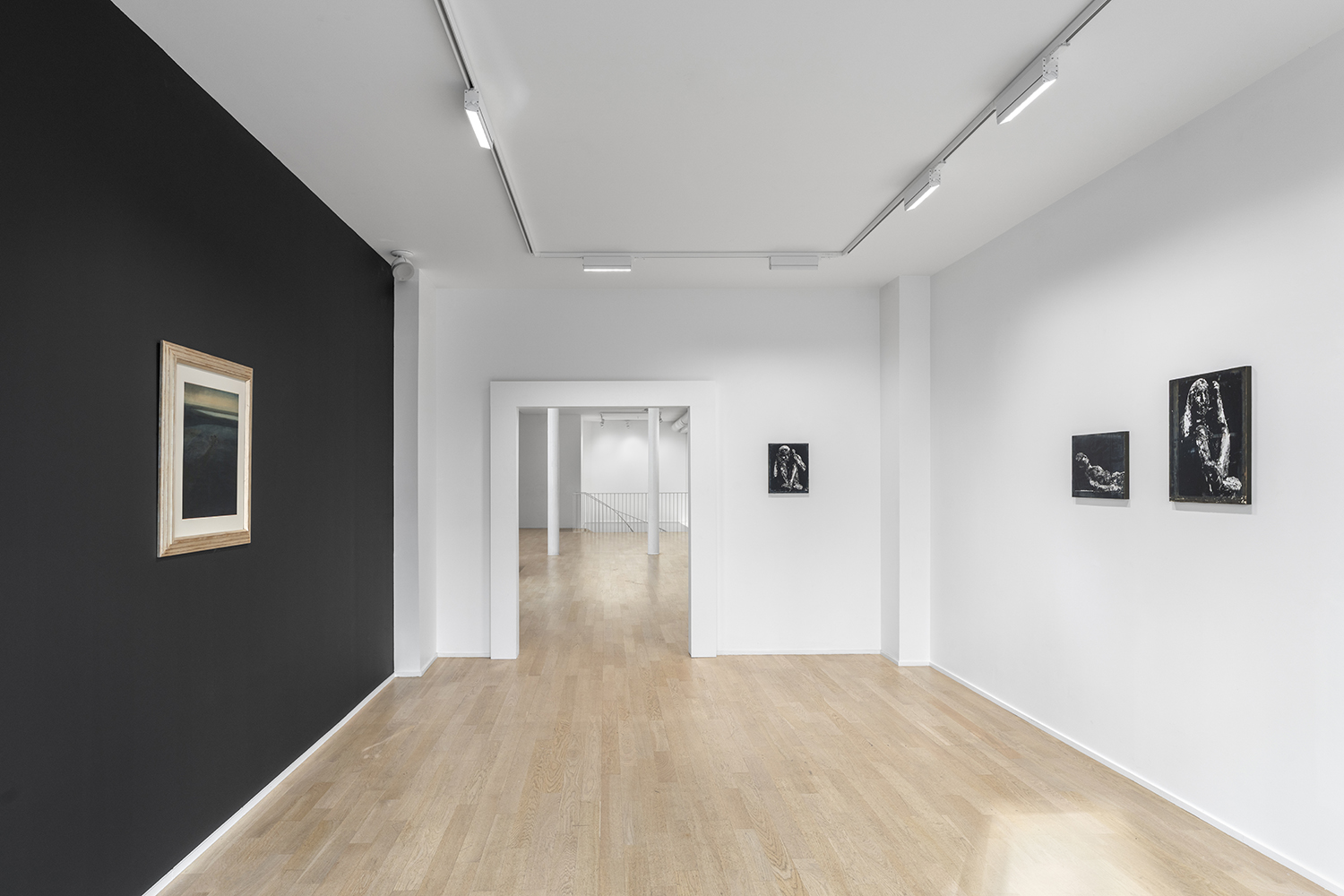
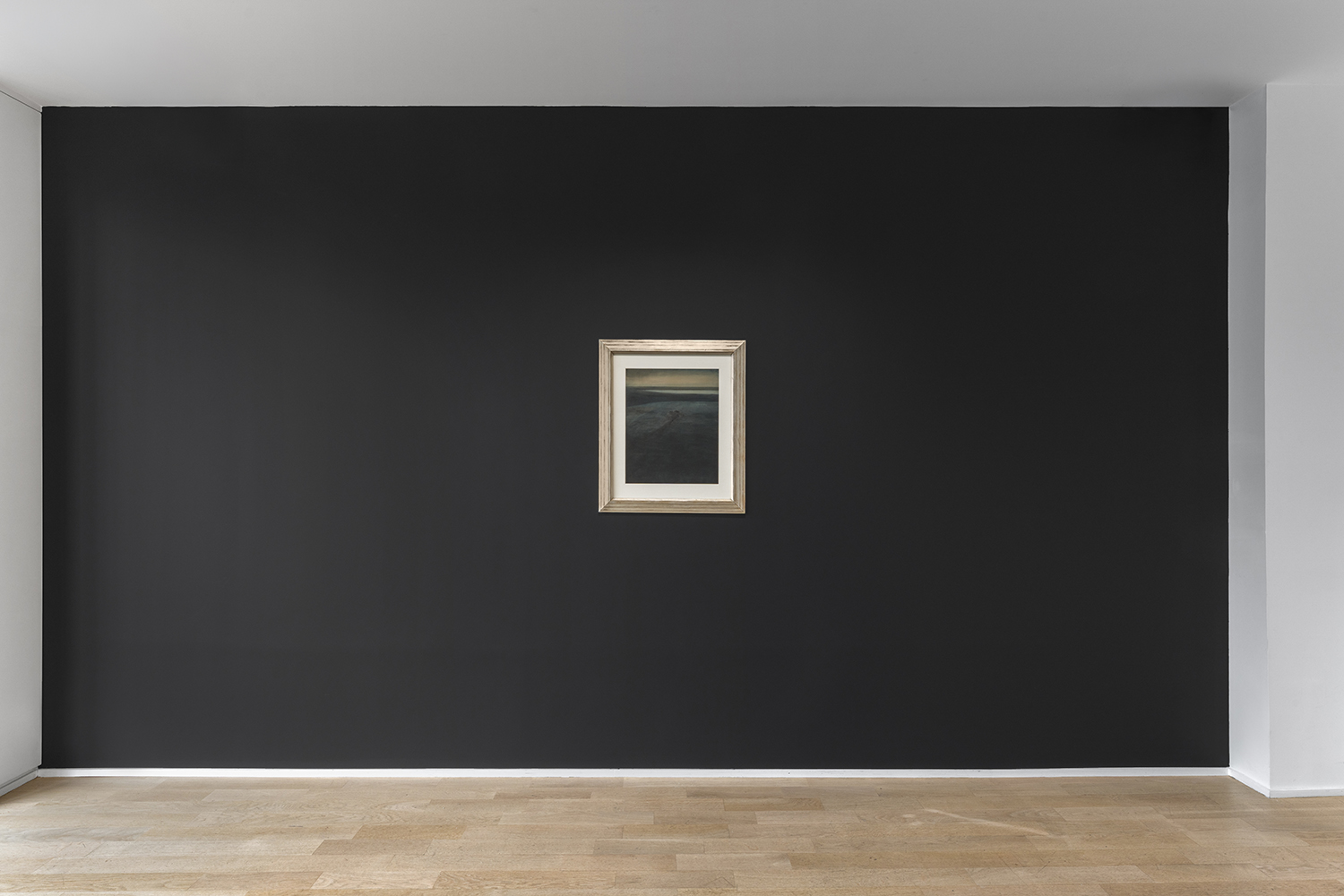
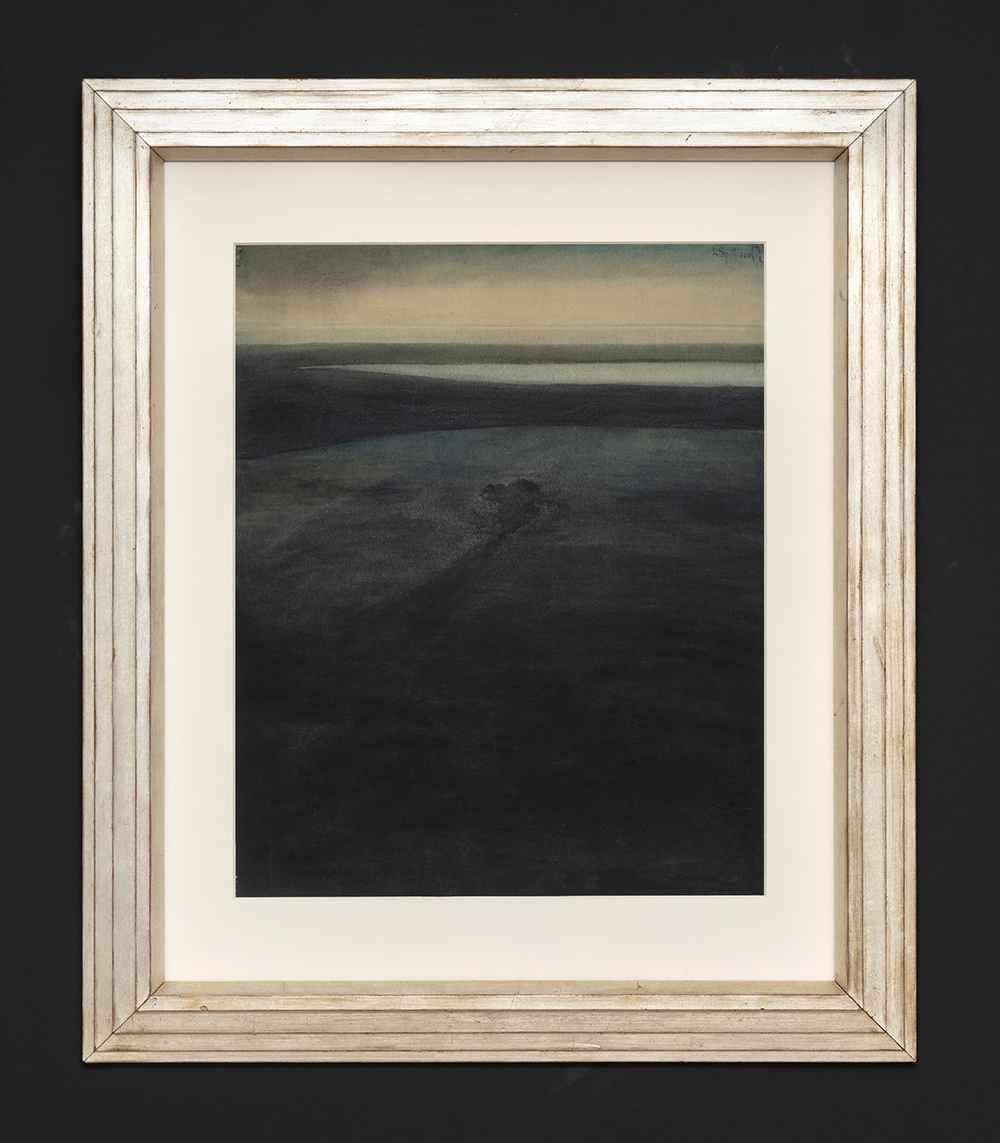
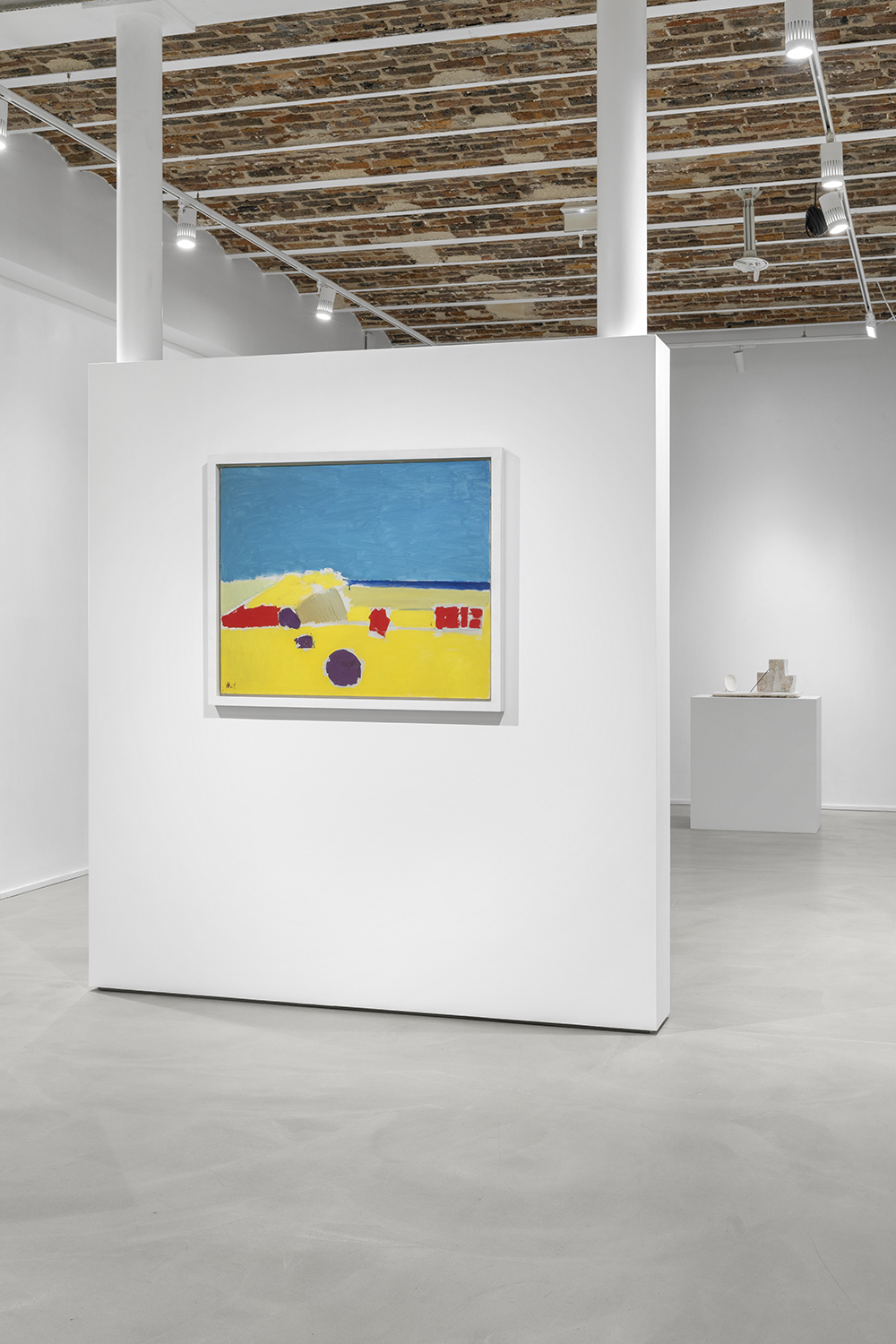
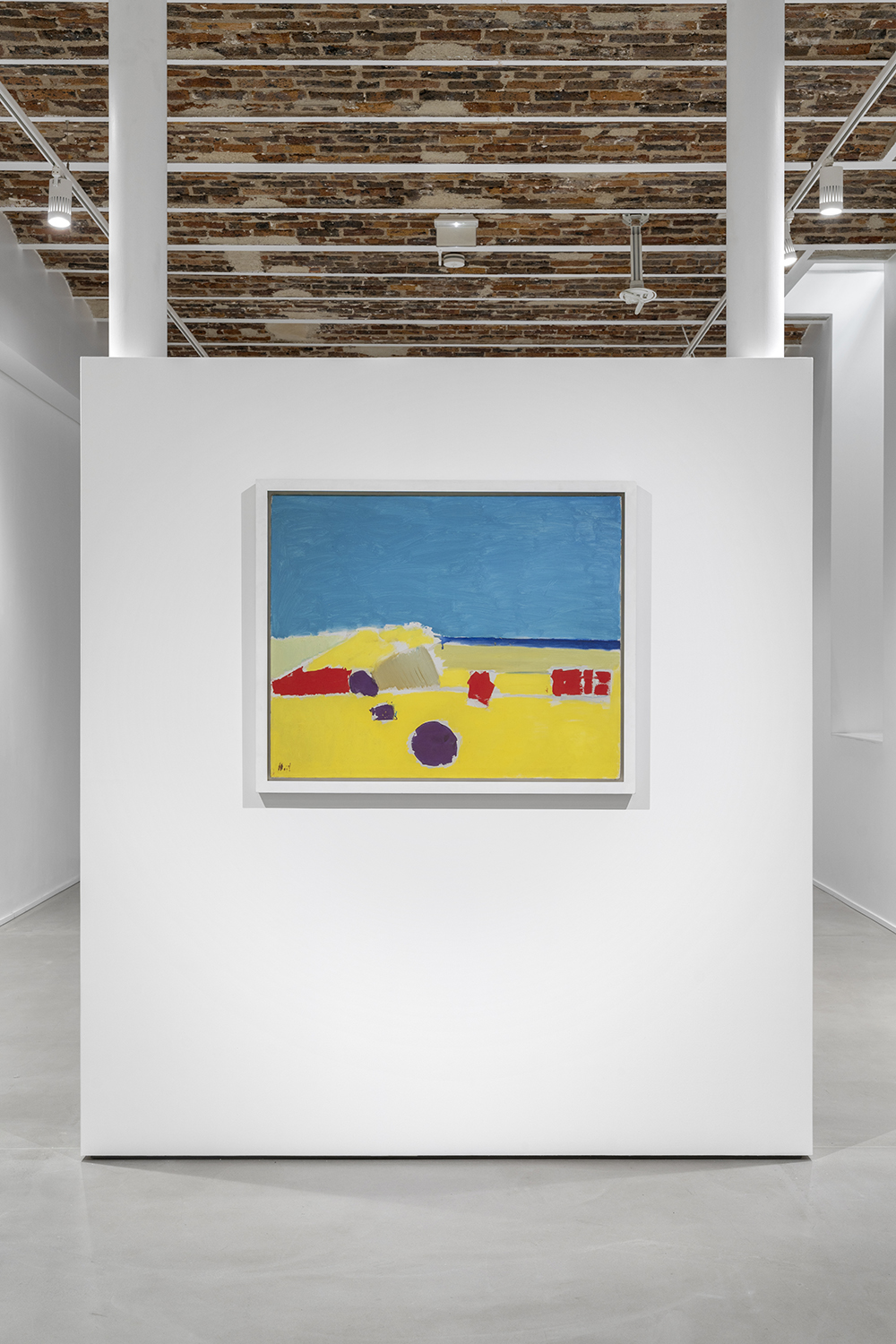
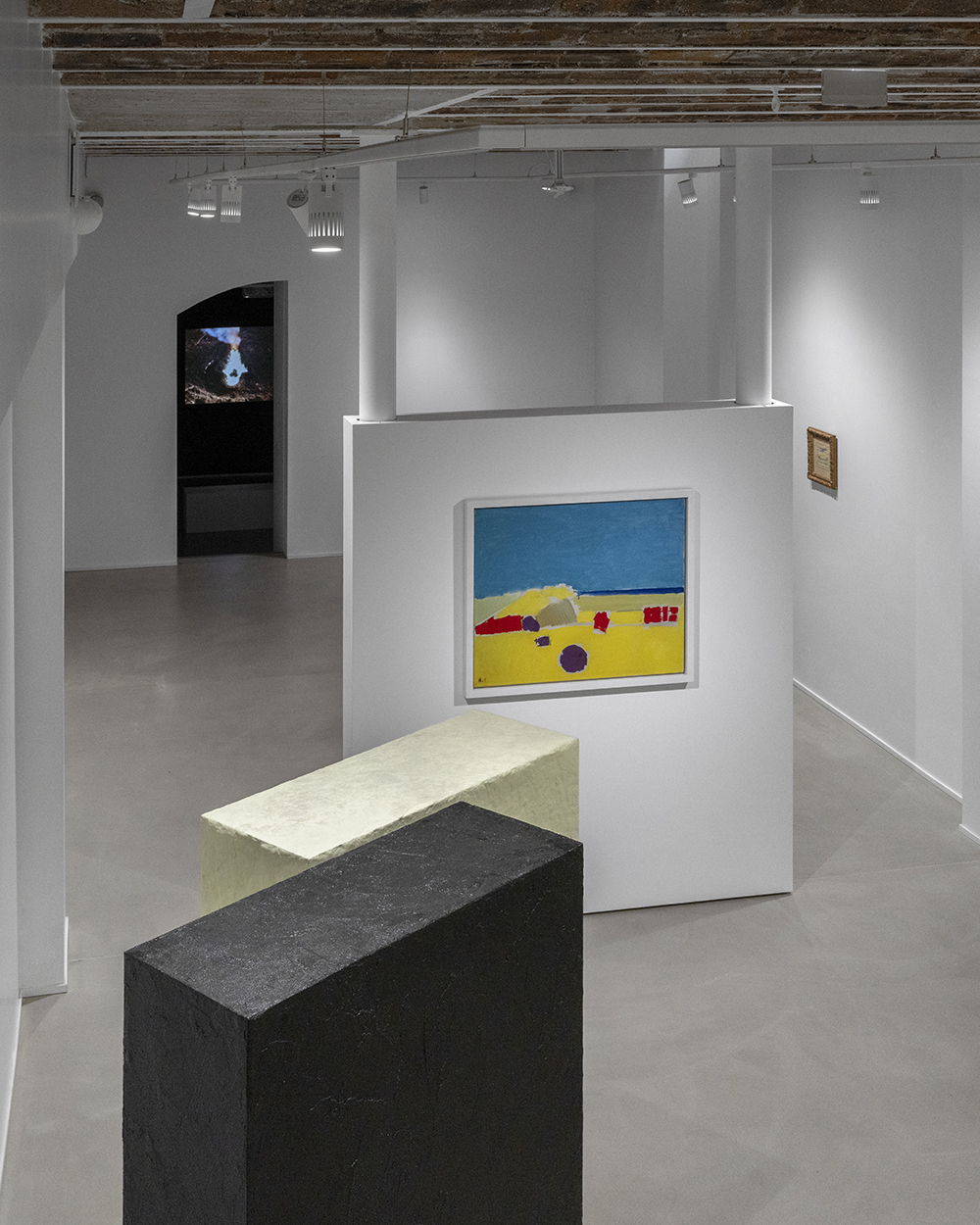
Morning and evening, light and darkness. Good and evil. The world sometimes seems to hinge on two opposites walking hand in hand, and somehow on their imperfect reunion, on the unfulfillable desire for their miscibility. And art sometimes seems to hinge on the exploration – bold because it is undoubtedly incomplete, existing only contingently, as a project coloured by fantasy and failure – of one of these logical oddities, these incompossibilities that reality nevertheless articulates with a single word, a single gesture. With a single fact: the horizon, for example, laid down in Nicolas de Staël’s work as a force – active, mobile – and in Léon Spilliaert’s as a leaf, a thought – evanescent – or, the begetting, the filial continuation of distinct, related lives, into a single one that stretches them as it asserts itself; one might believe that each era thus gives birth to its works, and its ways of seeing them. In his “Salon of 1859”, Charles Baudelaire remarked before Eugène Boudin’s “ horizons in mourning (2) ” – of which this exhibition features a beautiful and rare example – that “ imagination makes the landscape (3) ”: Baudelaire looking at Boudin, art becomes that privileged realm of the world where imagination is the primary concern.
We know how important this vision beyond the visible is to him: “ Imagination is the queen of truth, and the possible is one of the provinces of truth. It has a positive relationship with the infinite. Without imagination, all the faculties, however sound or sharpened they may be, are as though they did not exist […]; for – allow me to go so far and to ask, What is virtue without imagination ? (4) ”
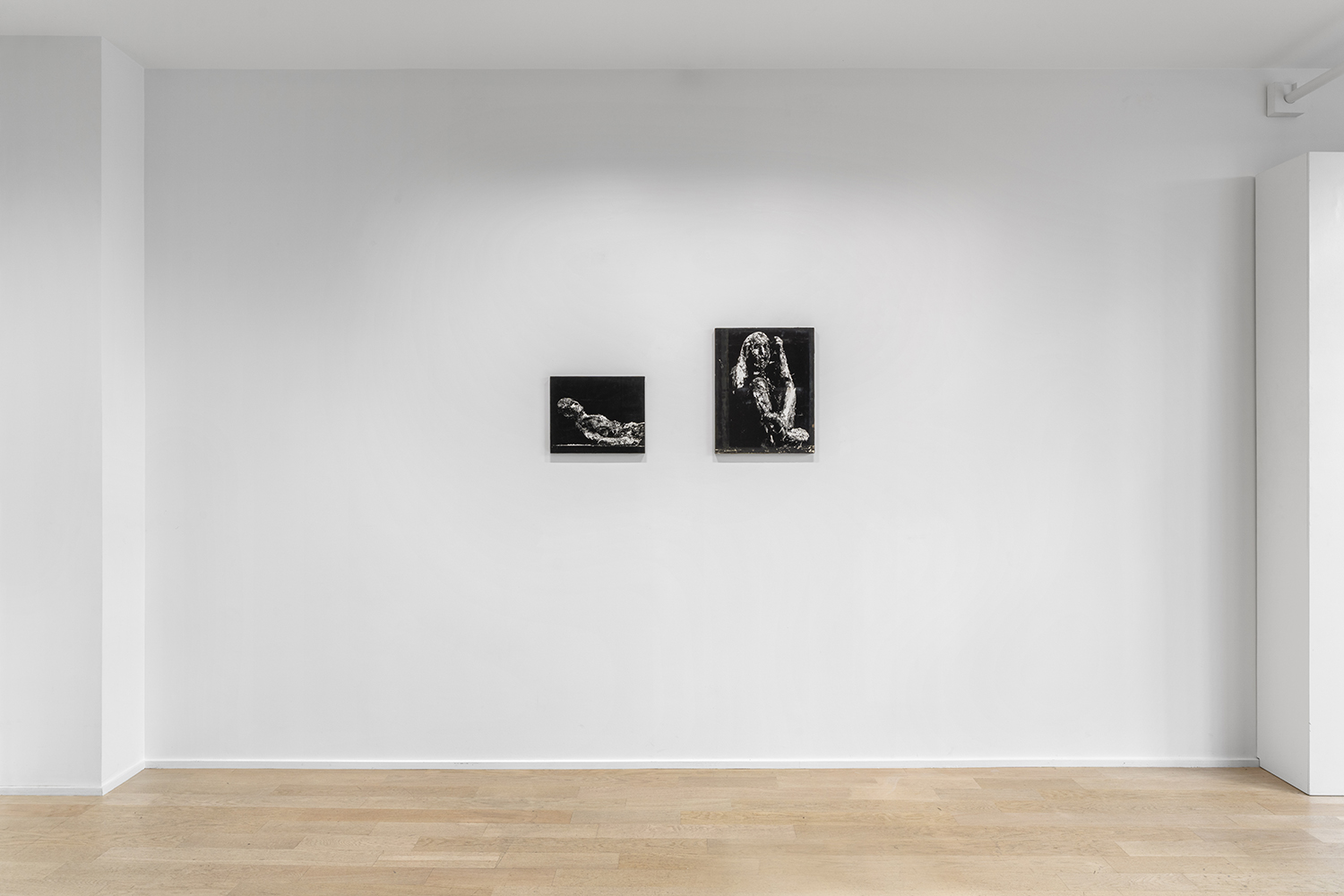
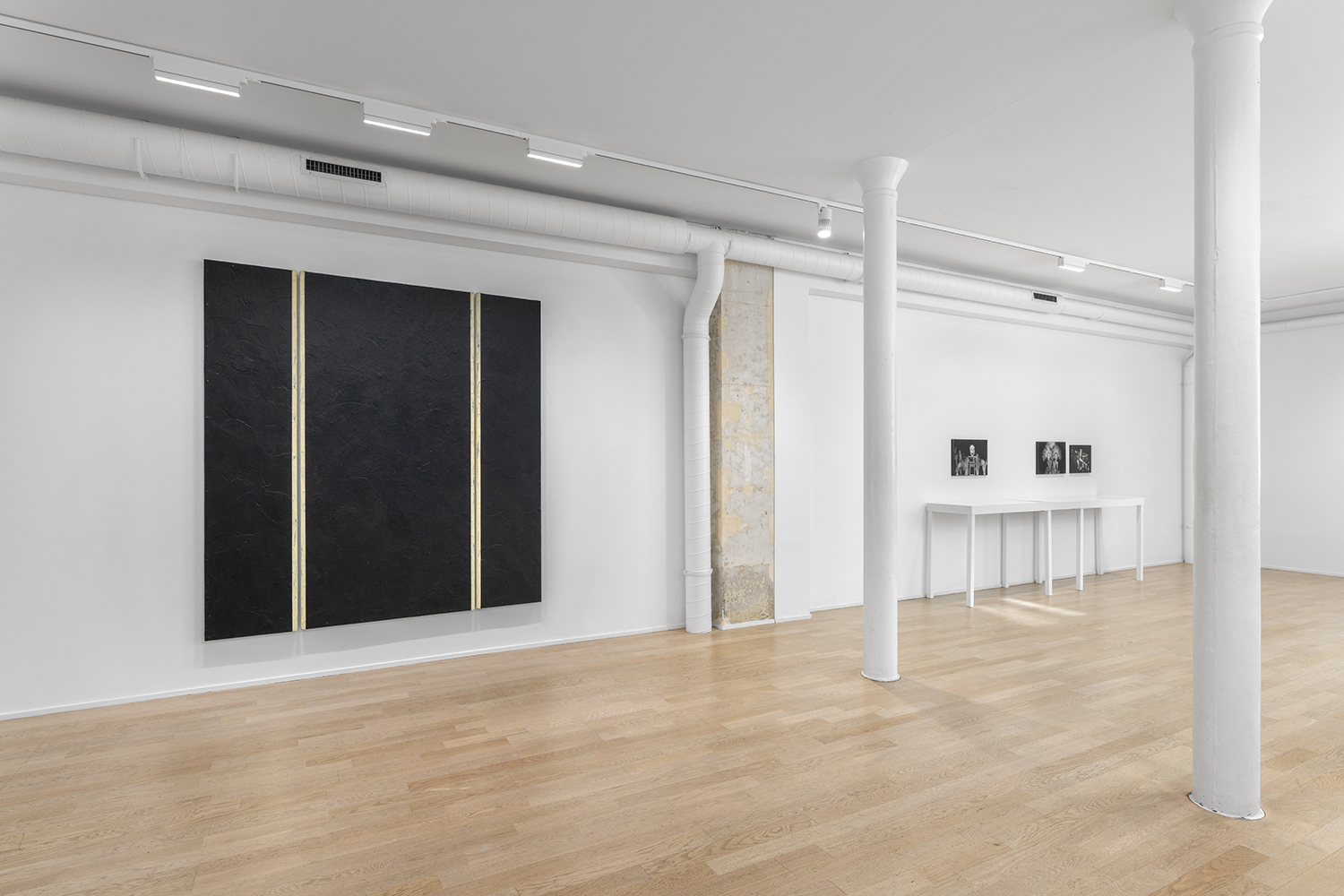
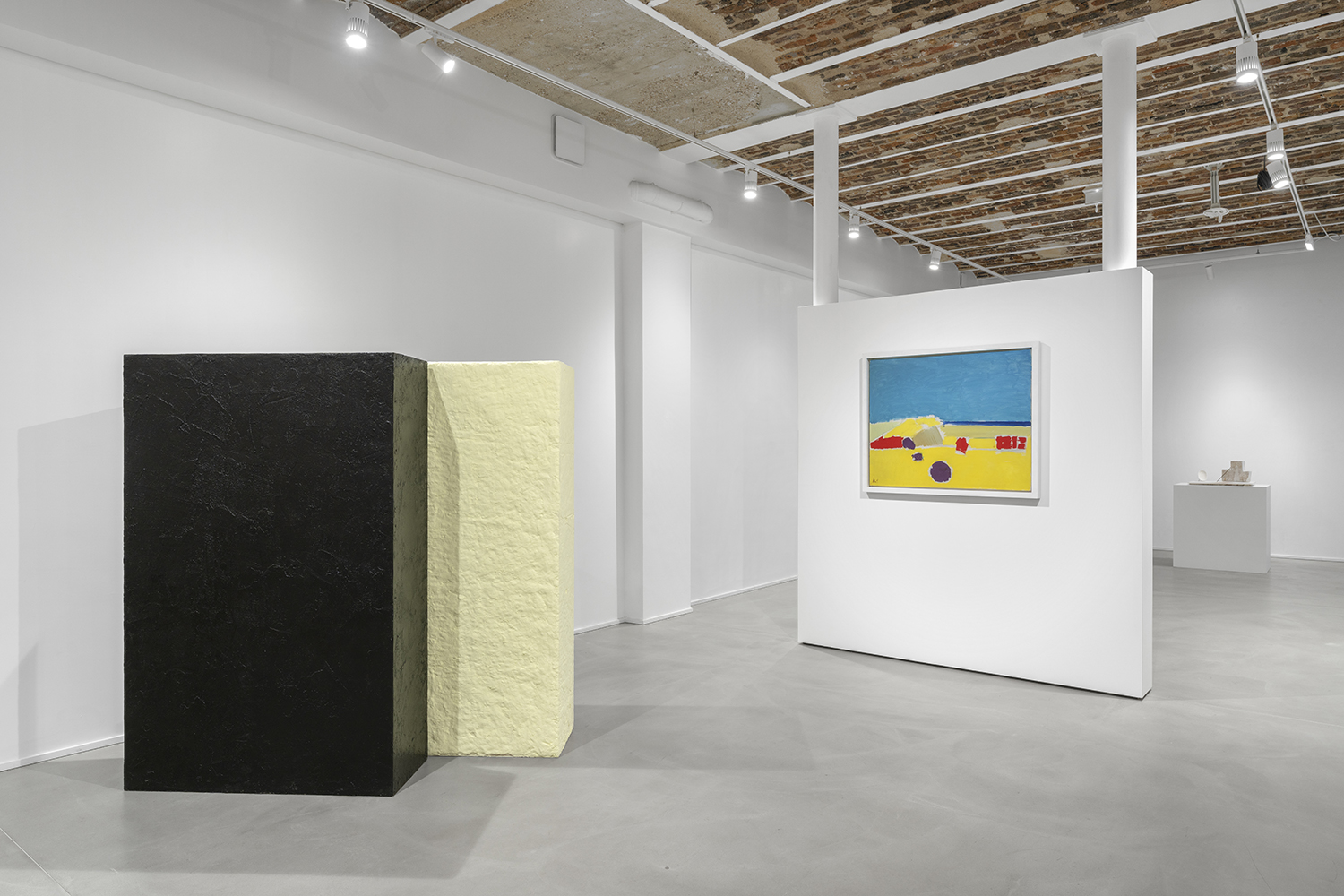
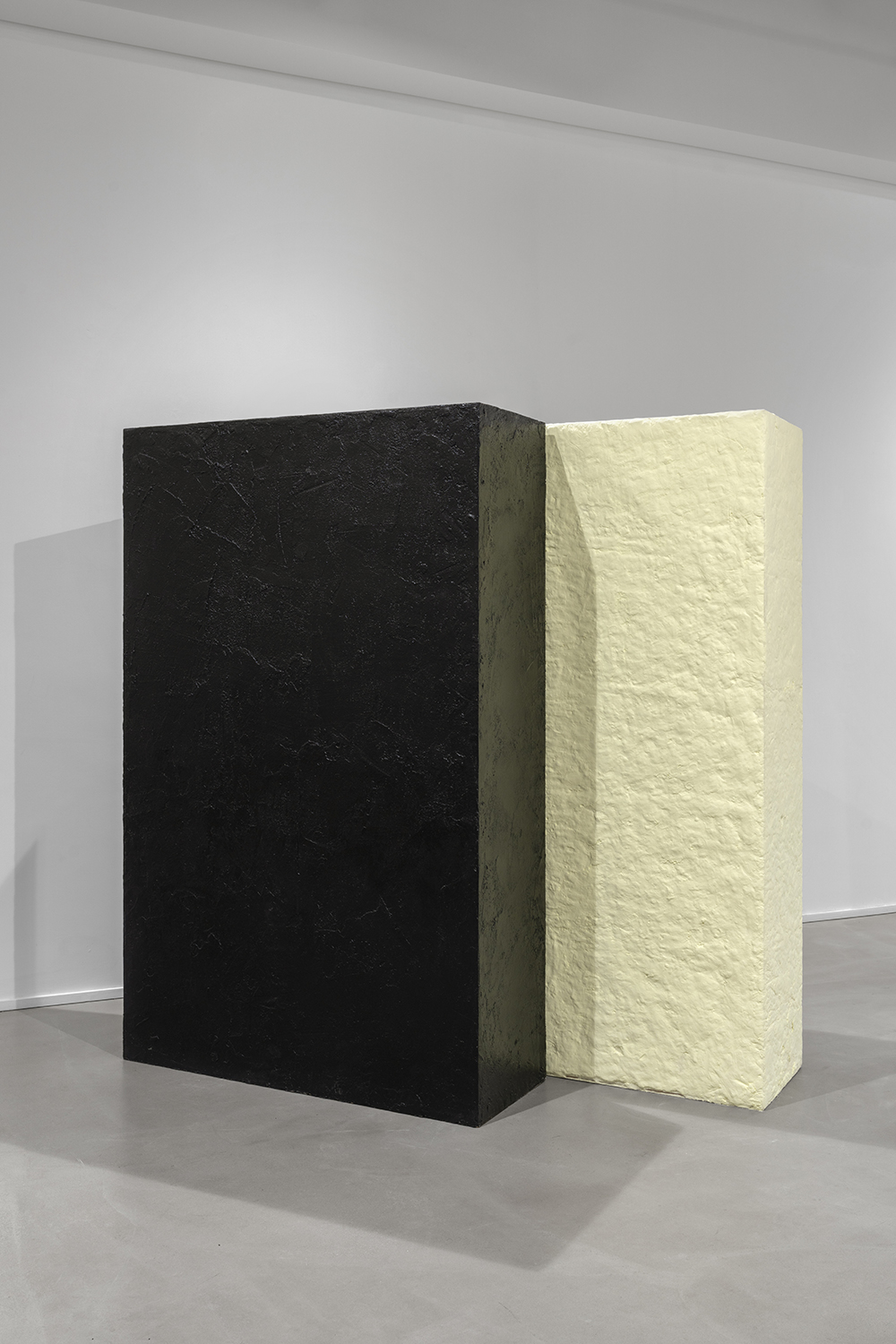
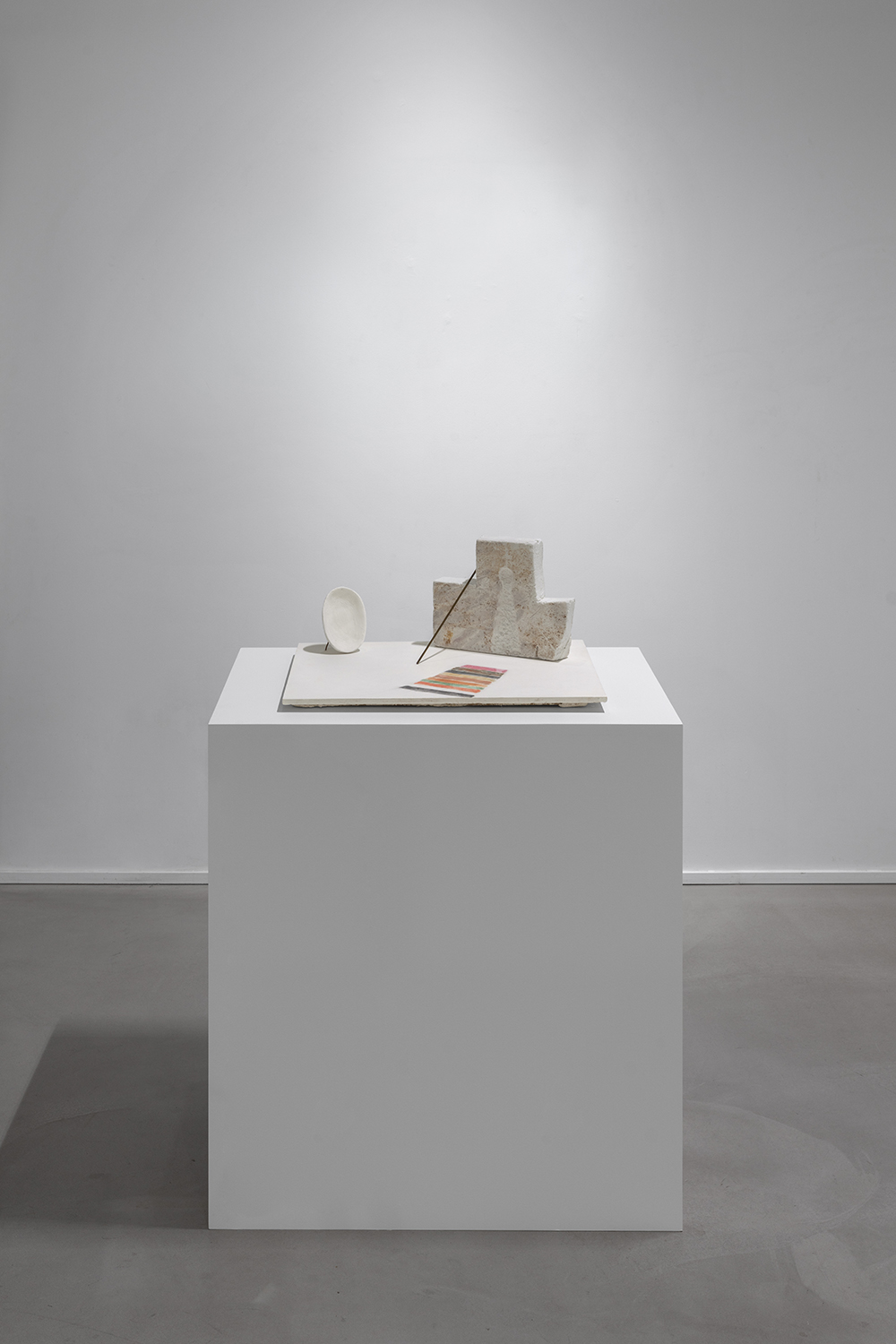
Only art, then, could give these follies of reality a semblance of a face, a body, or rather a silhouette – such as that sketched by Ingeborg Lüscher’s terribly inhospitable juxtapositions – and to accompany them with feelings, effects, intuitions, processes, and, beyond that, a material survival, a persistence. If the most interesting art, in one way or another, portrays the world as an impossible heading toward its own mystery, we should constantly return to the prodigious way in which art makes us go through time, toward its origin, while simultaneously moving toward an eternal prospective, as far ahead as possible, and marvel at it. That is its magic: to correlate, without realising it, its expression with a general availability, as it becomes open to all times, within the formless repository of humanity. Not all the monuments of the modern world can claim this glory.
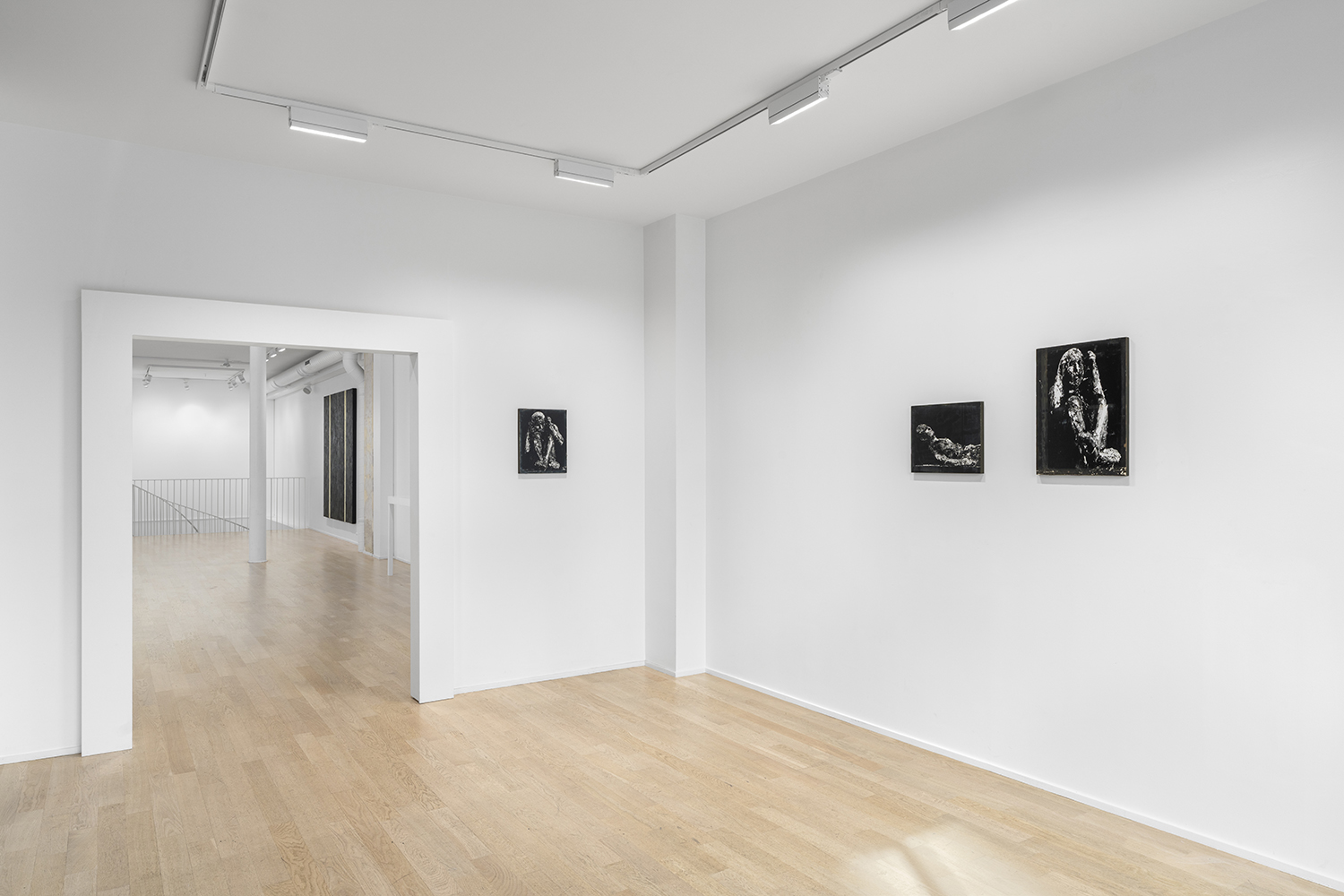
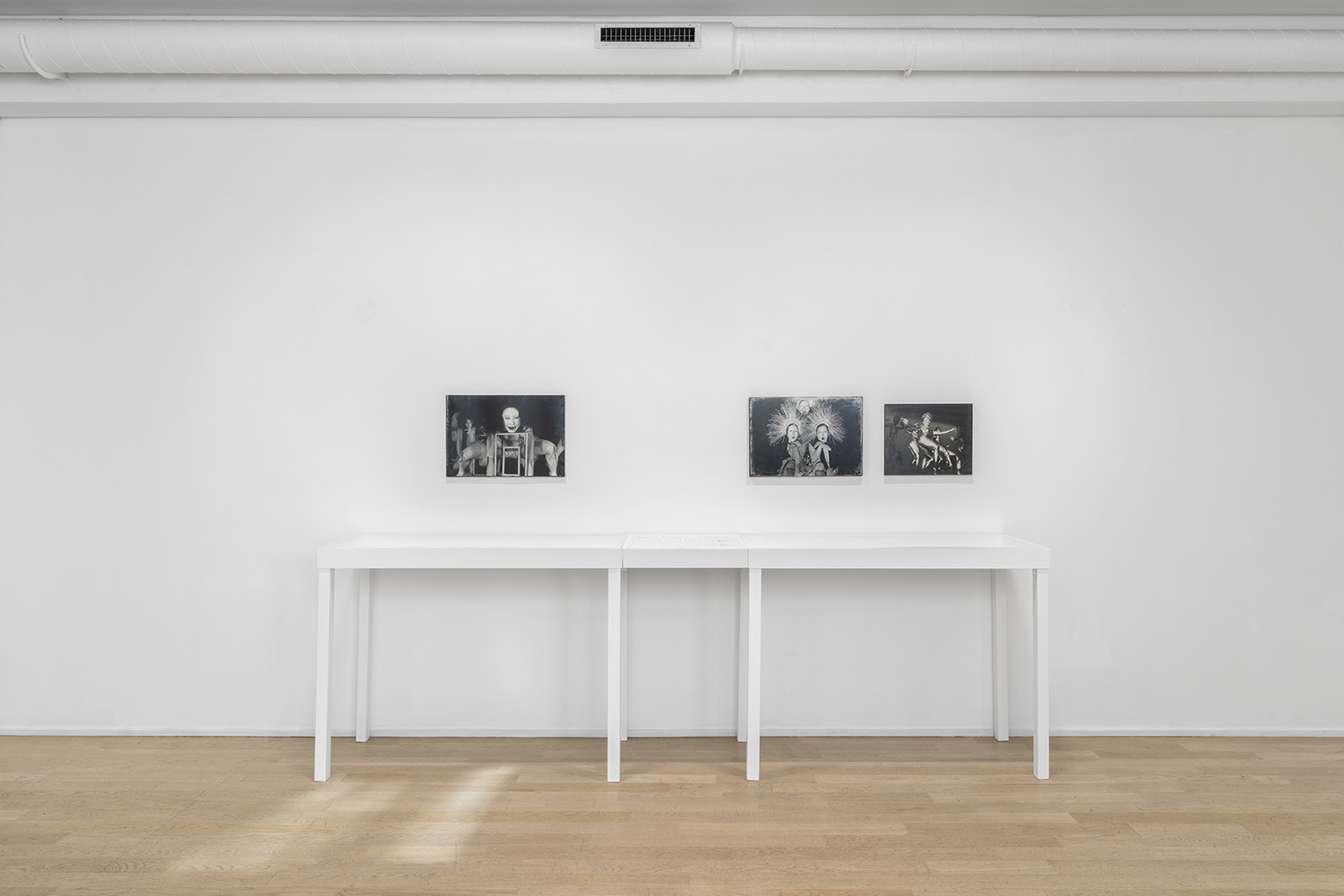
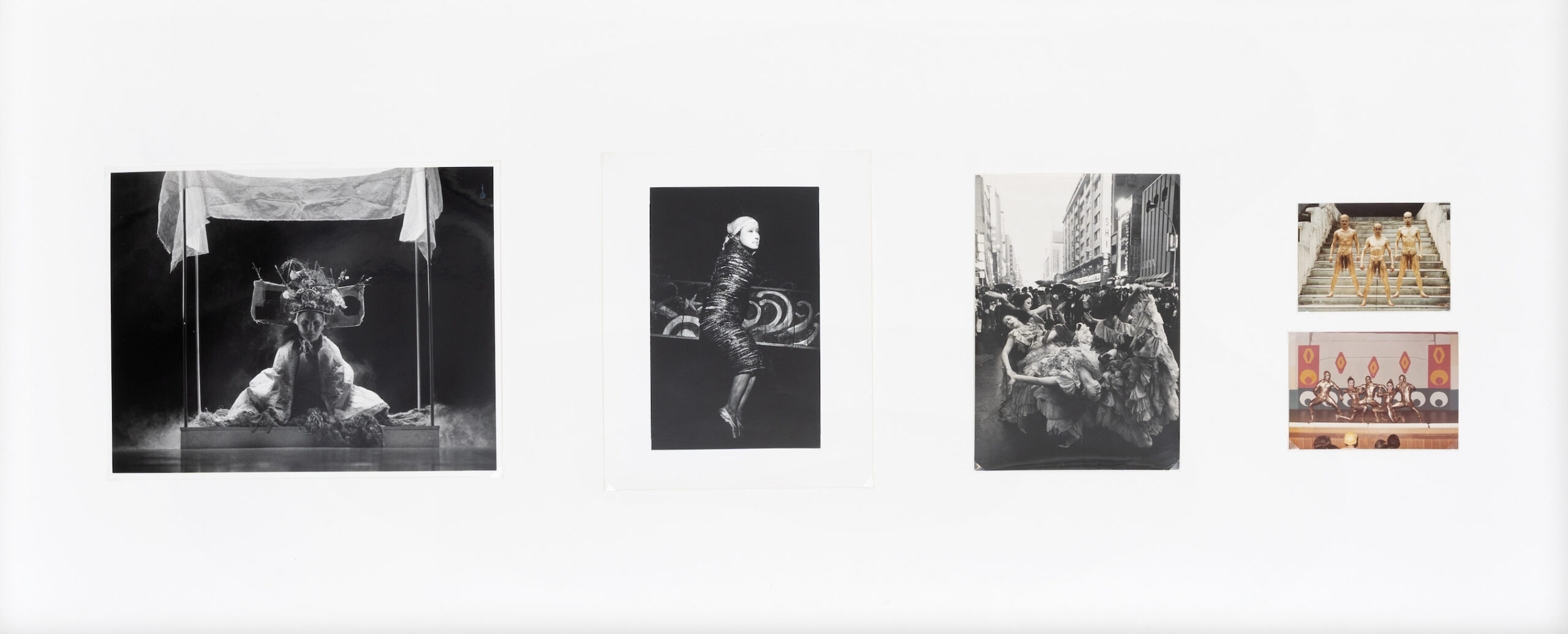
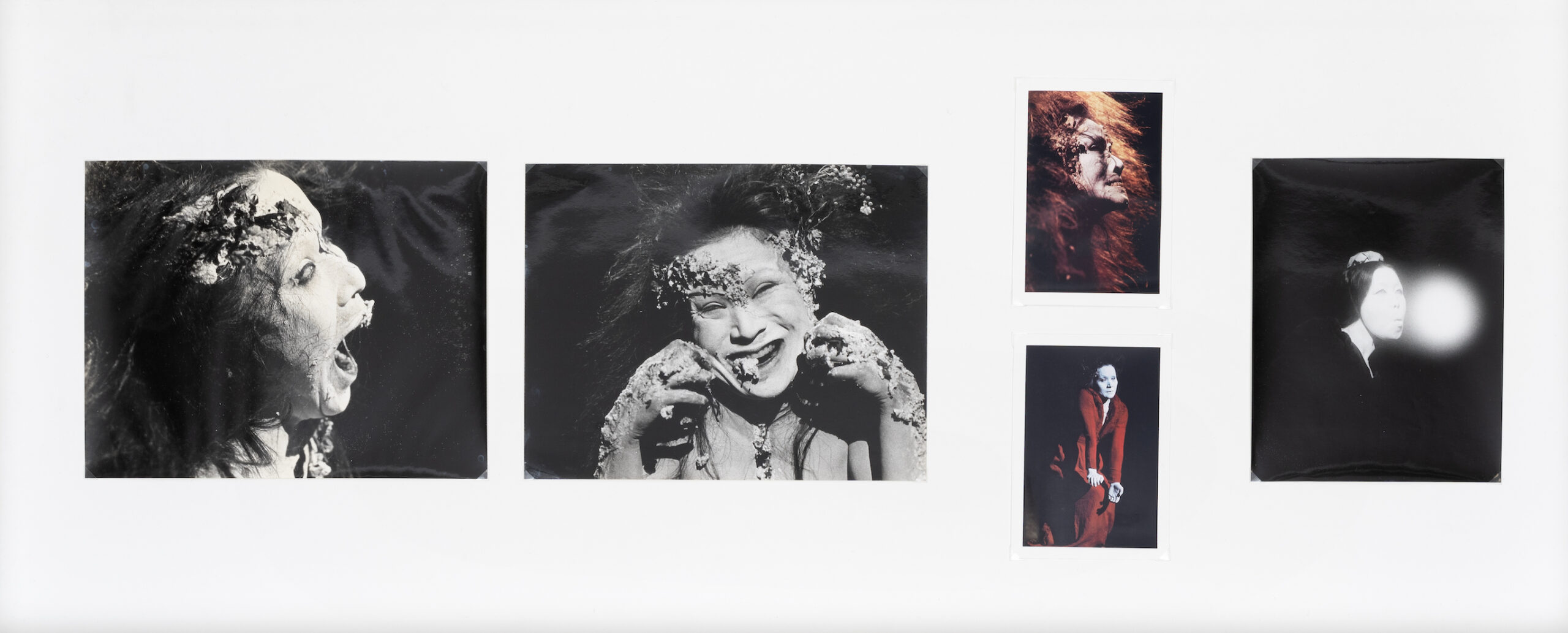
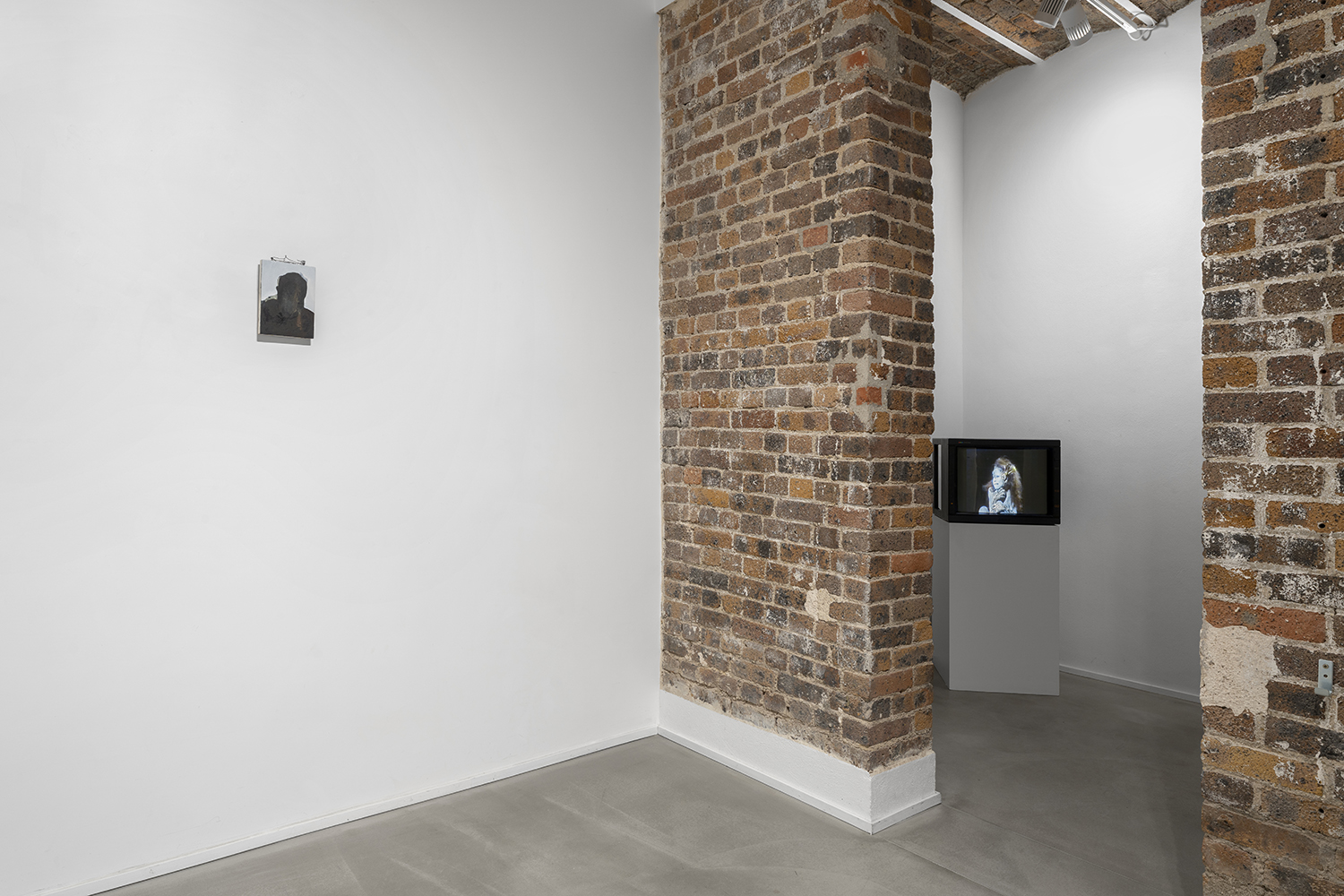
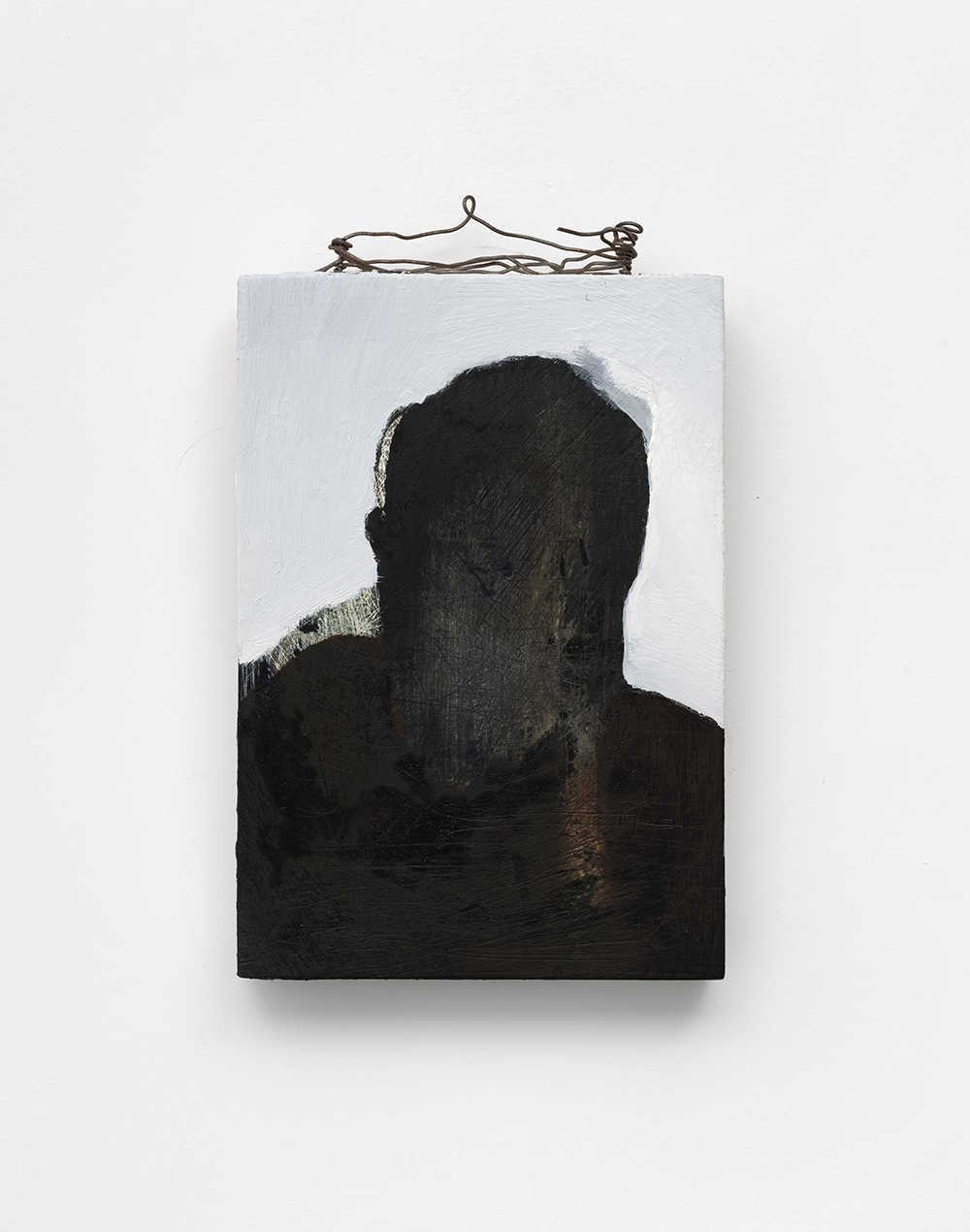
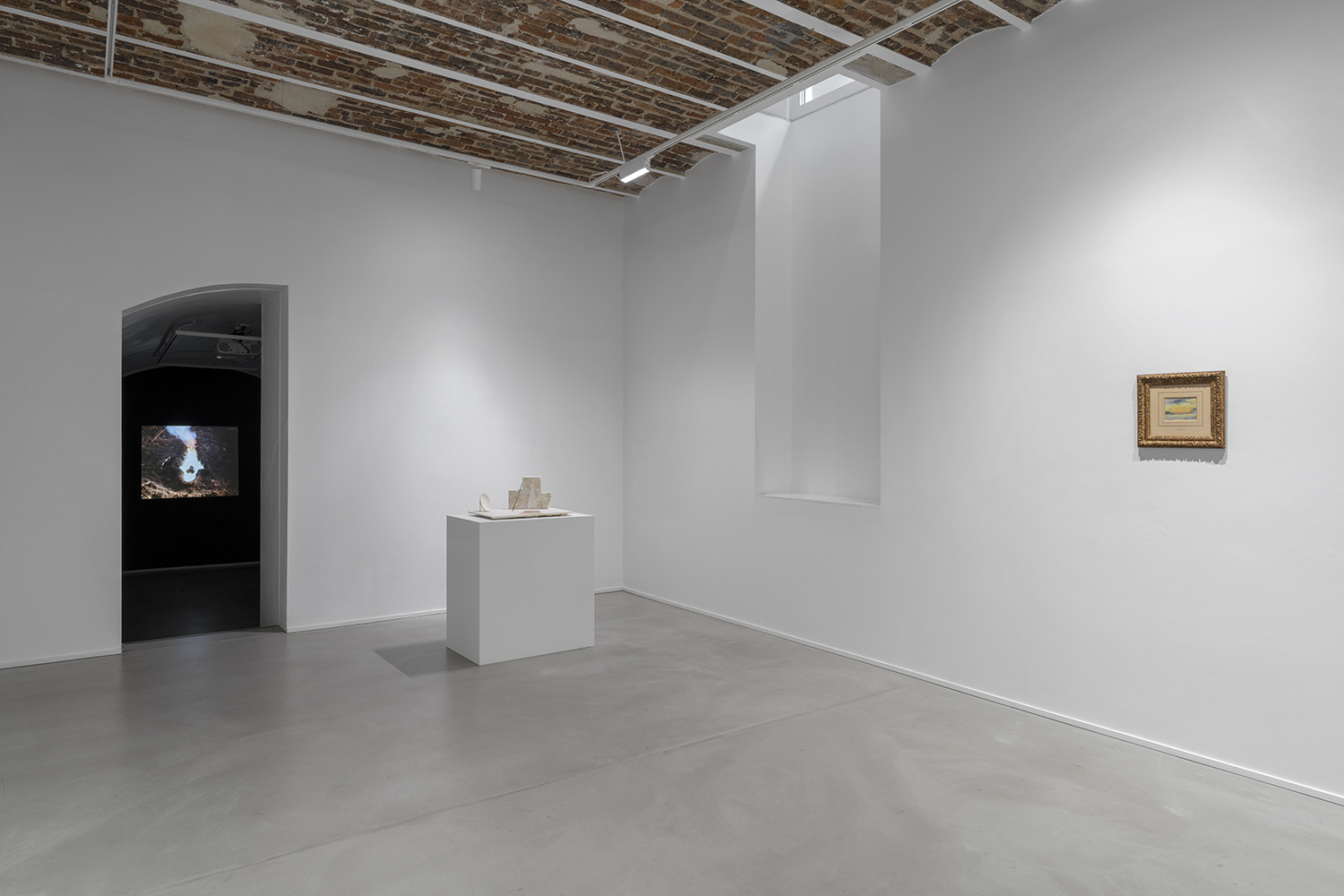
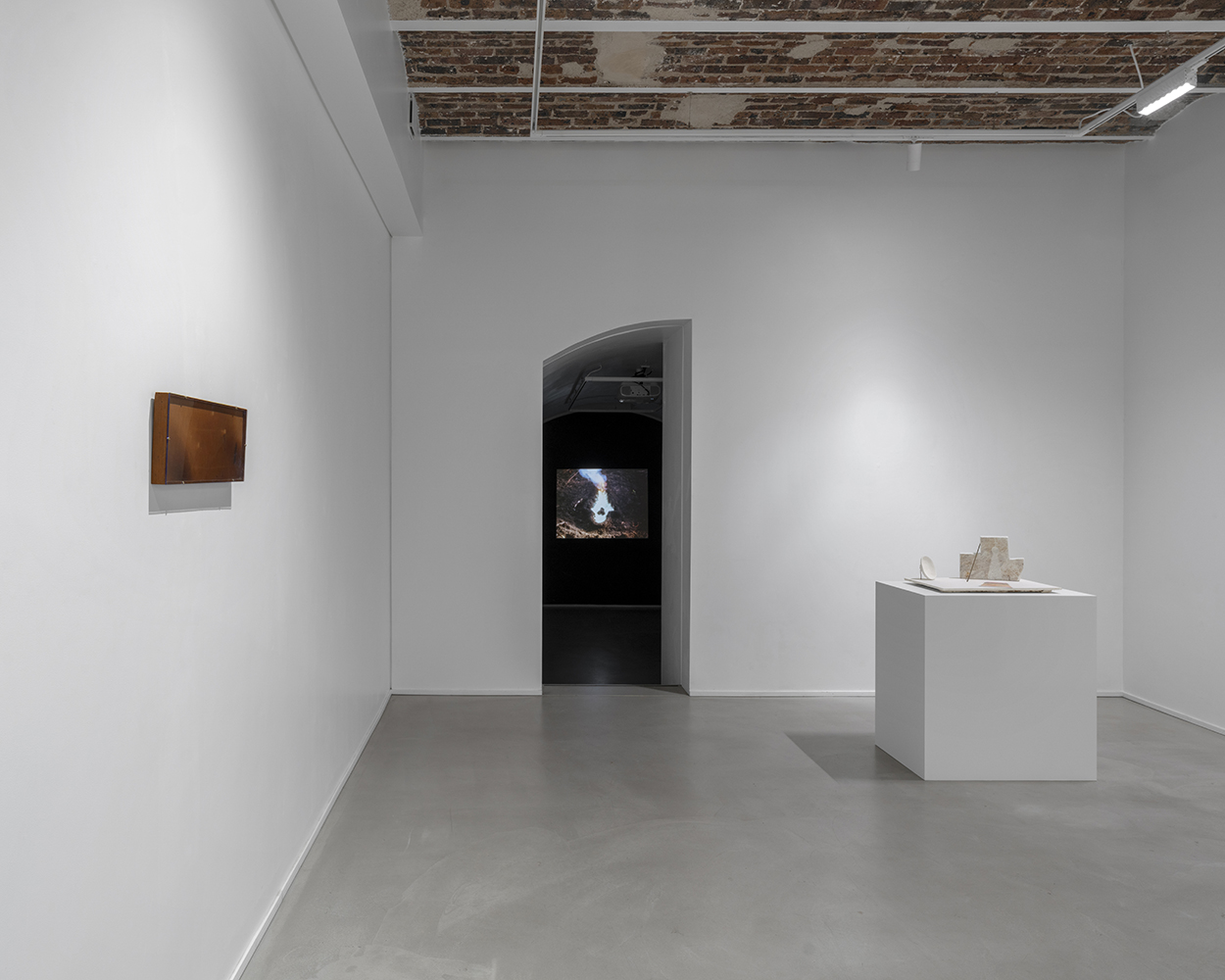
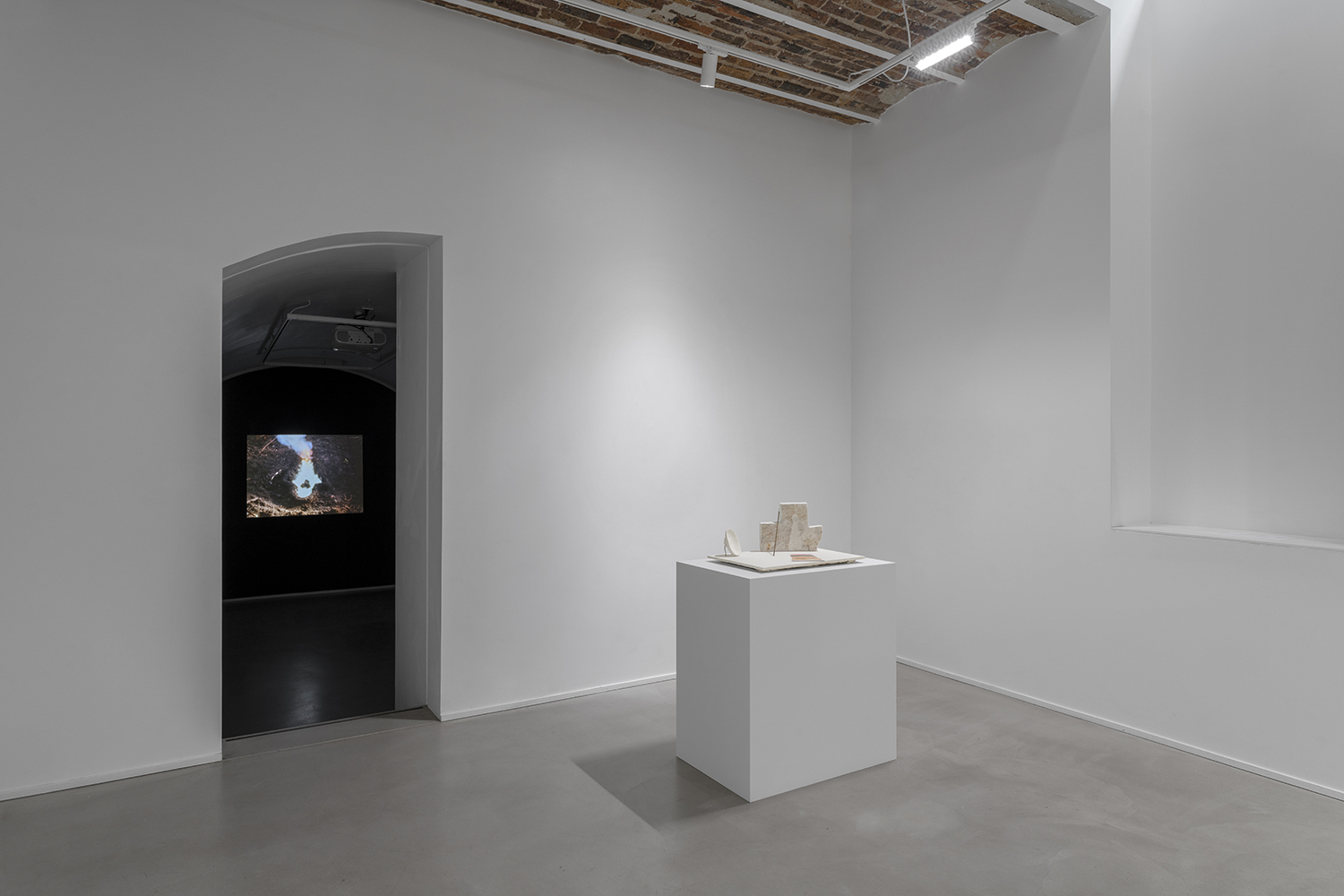
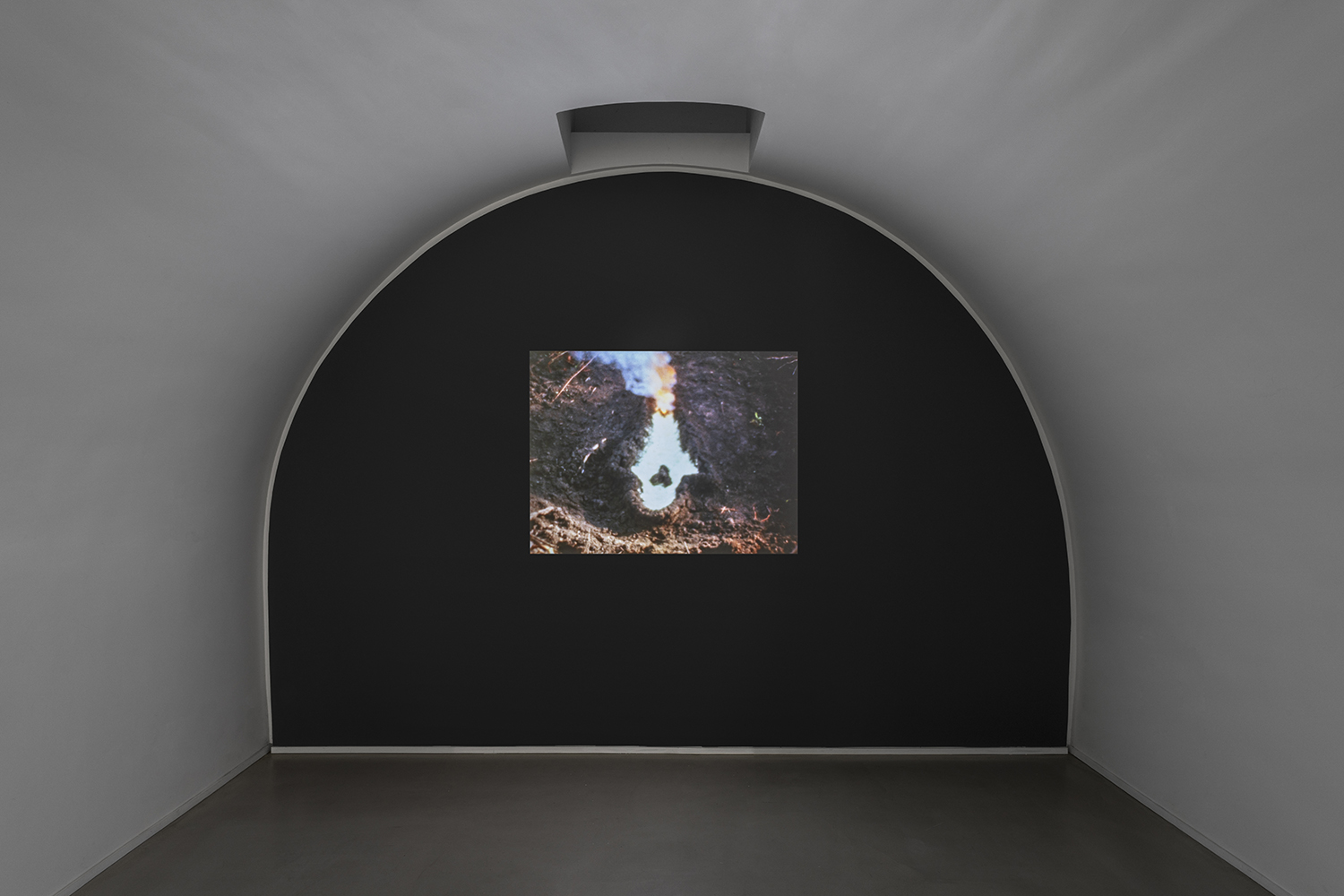
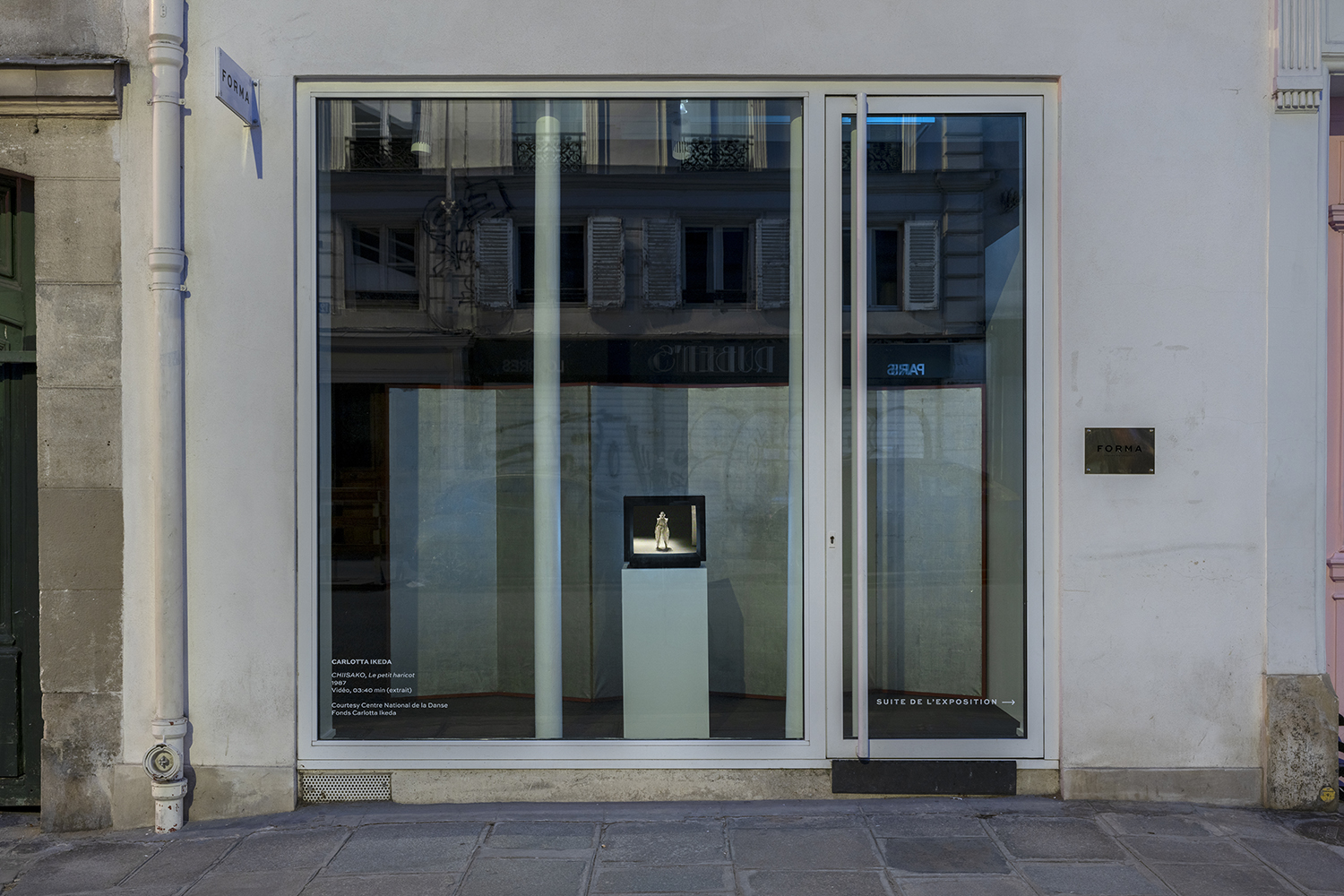
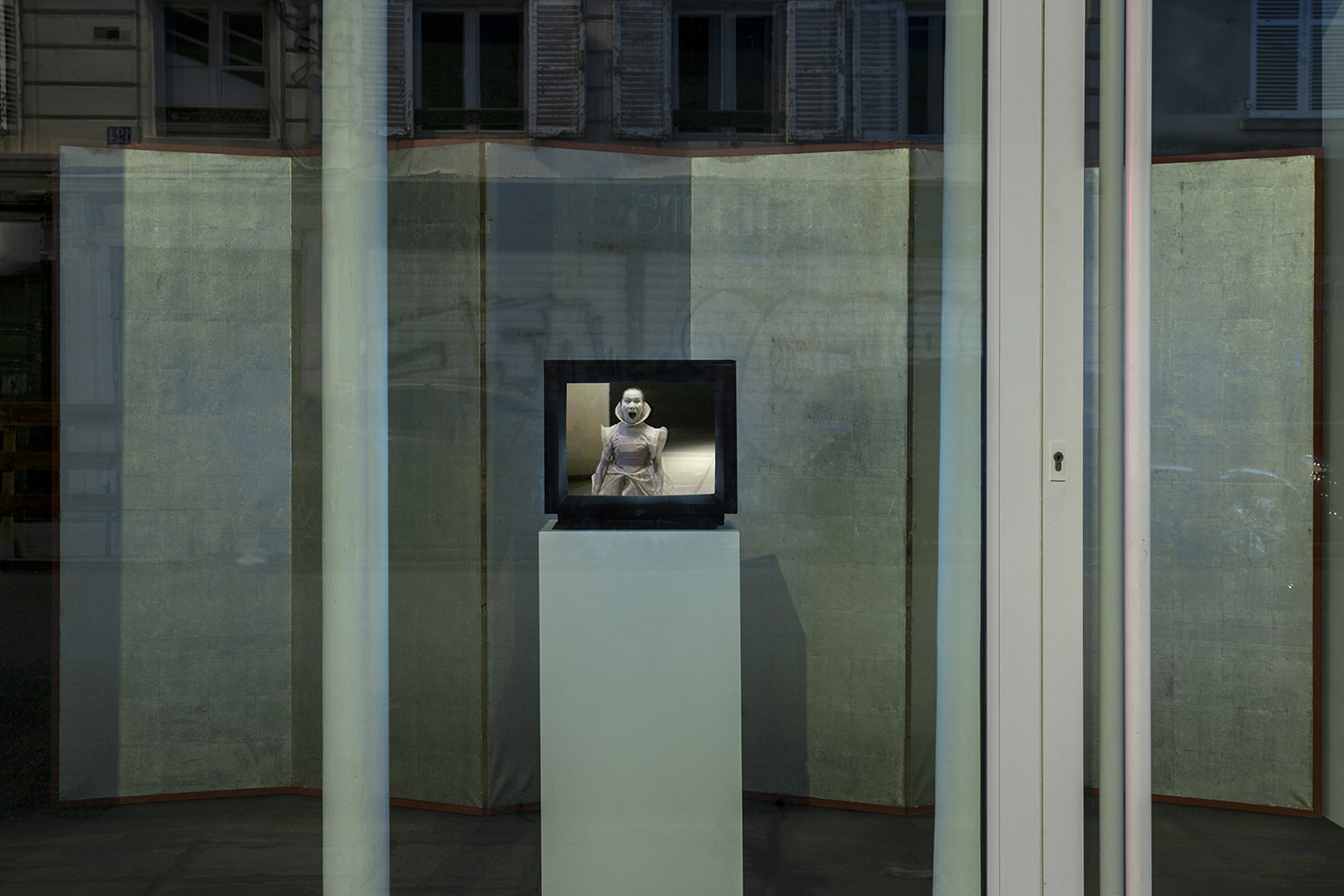
Buto is undoubtedly one of those magical gestures, extended only into the uninhabitable realms of the mind – synthesising atomic horror, symbolising it, channeling it into behaviour so that something might emerge from it, to rebuild from the ruins. At roughly the same moment in the world’s history – that is, in the aftermath of the unthinkable atomic bomb, in the midst of its unpredictable consequences, and in its irreversibility as well – Yves Klein, a Westerner intimately connected to Japan, a devotee of martial arts and Zen philosophy, was painting with fire. What does this memory of form, this remnant of existence, emerging from the then-gaping belly of reality – which the already gaudy American model was filling with its products – tell us? Perhaps, at its core, this thing – simple and terrible – that one of Ana Mendieta’s Siluetas would also say, just as the small painting presented by Nika Kutateladze; Fausto Melotti’s L’ombra dell’anima says it literally: one must love one’s shadow at all costs.
Guillaume Oranger
1. Claude Lévi-Strauss, Tristes tropiques, Paris, Pocket, 2024 [1955], p. 67
2. Charles Baudelaire, « Salon de 1859 », dans id. et Claude Pichois (éd.), Œuvres complètes, tome II, coll. « Bibliothèque de la Pléiade », n° 7, Paris, Gallimard, 2018 [1932], p. 666
3. Ibid., p. 665
4. Ibid., p. 621.
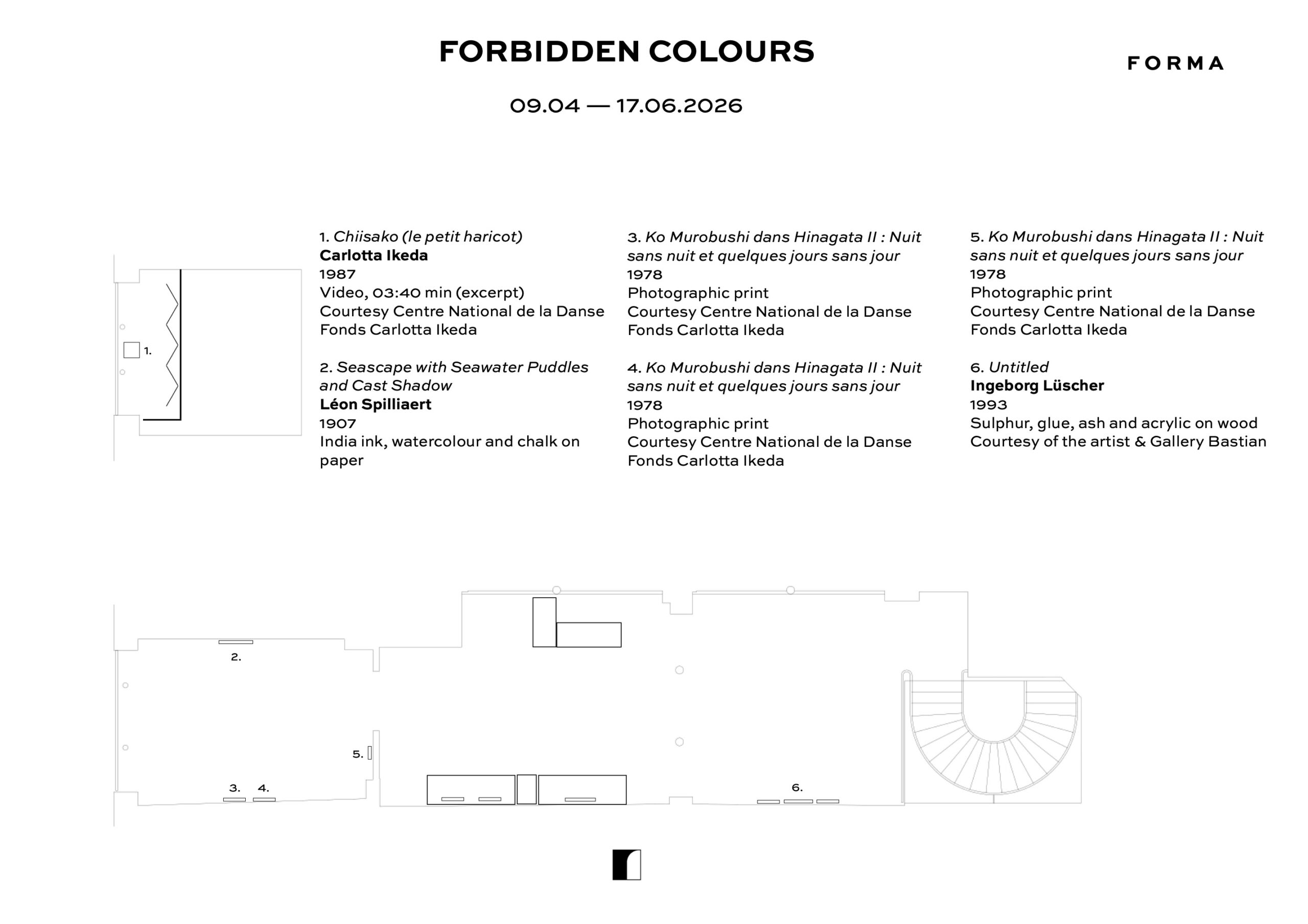
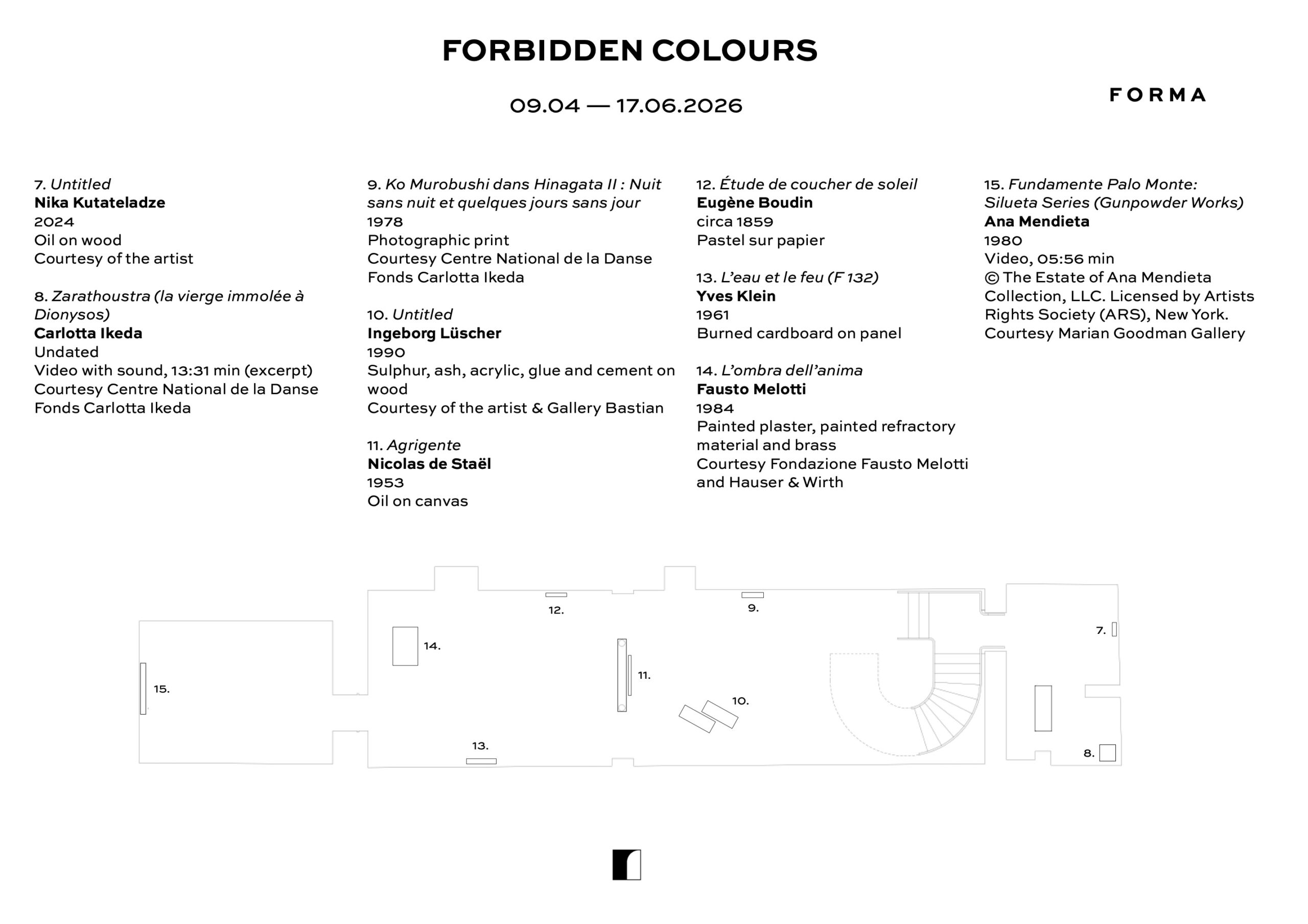
FLOOR PLAN